Hello, this is Daily Stock, delivering fast and accurate insights into global macroeconomics and commodity markets.
[Image: /stdaily/uploads/202606/gen_6a27119d9e5582.97886666.png]
Summary
On June 7 (local time), seven key OPEC+ nations, including Saudi Arabia and Russia, decided via video conference to increase their July crude oil production quota by 188,000 barrels per day (bpd).
While this marks the fourth consecutive month of production hikes since April, it remains uncertain whether this will lead to an actual increase in market supply.
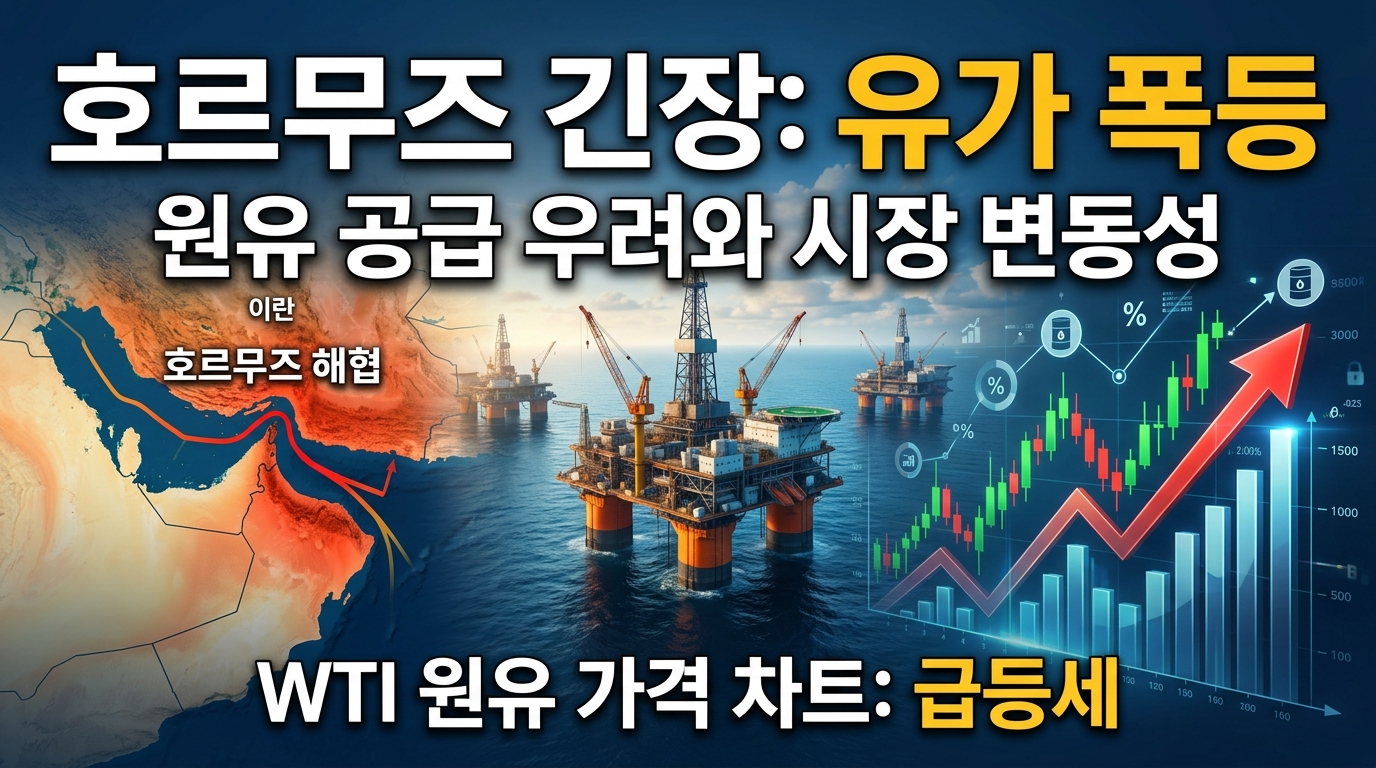
This uncertainty stems from the de facto blockade of the Strait of Hormuz—a crucial oil transit route—driven by ongoing geopolitical tensions between the US and Iran.
Consequently, the market is experiencing a mismatch where paper quotas are expanding while physical crude oil remains undeliverable.
Market Overview
[Image: /stdaily/uploads/202606/gen_6a2711a9017f07.37312673.png]
The fundamental decoupling among three major regions—the US, Europe, and Asia—is becoming increasingly pronounced in the global financial markets.
The US is holding up relatively well, supported by resilient domestic demand and leadership in AI infrastructure. Meanwhile, Europe faces a deeper stagflationary fog due to contracting manufacturing, and Asia tracks a different path with the Bank of Japan's hawkish pivot and the People's Bank of China's targeted liquidity injections.
Amid this tri-polar decoupling, global oil prices are fully reflecting the risks of a paralyzed geopolitical supply chain.
Following the United Arab Emirates (UAE) abrupt departure from OPEC+ on May 1 to pursue an independent production strategy, the voluntary supply-cut tapering framework has been reorganized around seven countries, led by Saudi Arabia and Russia.
| Indicator | Major Indicators (As of intraday June 9, 2026, Tentative) | WoW Change / Market Sentiment |
|---|---|---|
| **KOSPI** | 7,484.41 | KOSPI Fear & Greed: Fear (20.9) |
| **KOSDAQ** | 911.39 | Increased relative volatility compared to KOSPI |
| **NASDAQ** | 26,012.73 | NASDAQ Fear & Greed: Neutral (42.1) |
| **USD/KRW** | 1,527.30 KRW | Persistent dollar strength and won weakness |
| **Brent Crude (ICE)** | $97.80 (As of intraday June 8, Tentative) | Staying in the high-$90s due to the Hormuz blockade |
Financial Analysis
The financial health of oil-producing countries is closely linked to this gradual OPEC+ production increase policy.
Saudi Arabia requires a fiscal breakeven oil price of at least $80–$85 per barrel to fund its mega-scale national projects, including the construction of its new smart city.
While the current oil price in the $90s is favorable for Saudi finances, stagnant trade balances resulting from delayed physical exports could become a long-term financial drag.
Russia desperately needs to maximize oil exports to fund its ongoing war efforts, but its production capacity has been degraded by Ukraine's precision strikes on its fuel infrastructure.
Russia's oil output in May fell to a 10-month low, making it difficult for the country to fully translate its additional July quota of 62,000 bpd into actual financial gains.
Valuation
Brent crude is currently hovering in the mid-to-high $90s per barrel, as geopolitical risk premiums clash with concerns over a global economic slowdown.
Brent's 52-week trading range is highly volatile, spanning from a low of $58.72 to a high of $126.41.
The valuation above $97 largely prices in concerns over supply chain disruptions in the Strait of Hormuz.
However, demand-side headwinds, such as slowing manufacturing activity in China and the potential release of US Strategic Petroleum Reserves (SPR), are capping further oil price spikes.
Analyst and Institutional Insights
[Image: /stdaily/uploads/202606/gen_6a2711b4e20931.00802988.png]
Jorge Leon, an analyst at consultancy Rystad Energy, pointed out, "As long as the Strait of Hormuz remains closed, the OPEC+ production hike agreement holds little significance."
He added that because physical crude cannot reach the market, this move is merely a 'policy signal' to stabilize sentiment rather than a meaningful change in physical supply.
In a recent report, global rating agency Fitch Ratings raised its average Brent crude forecast for this year to $87 per barrel, upgrading its outlook for the global oil and gas sector to "Improving."
Fitch warned that under its baseline scenario—where the Strait of Hormuz remains closed through late July before reopening—the sudden release of accumulated oil could trigger a sharp pullback in Brent prices back toward the $70 level.
Risk Factors
The most immediate risk is the prolonged geopolitical conflict in the Middle East and a structural halt in transport routes.
If the closure of the Strait of Hormuz lasts longer than the five months estimated by experts, the increased oil produced by OPEC+ could end up stranded inland, further driving global energy inflation.
Furthermore, cracks in the OPEC+ cartel's coordination, highlighted by the UAE's exit, represent a latent risk.
Once transport routes normalize, if member states break their output commitments and race to capture market share, the market could rapidly shift into an extreme oversupply phase.
Investment Outlook
South Korea's domestic fear & greed index stands in extreme "Fear" territory at 20.9, whereas the NASDAQ remains "Neutral" at 42.1, highlighting a divergence in global capital flow toward safe-haven assets.
High oil prices act as a macroeconomic headwind, driving global supply chain inflation and prompting central banks to delay rate cuts.
Thus, investing in the oil and energy sector right now should be approached through a "conditional scenario" lens linked to the physical reopening of the Strait of Hormuz and the recovery of shipping volumes.
Since oil prices could face sharp downward pressure the moment a geopolitical resolution is reached, conservative exposure management and phased positioning are advised over aggressive directional bets.
Investor Checklist Q&A
Q1. Why are global oil prices staying high in the $90s despite OPEC+'s decision to increase production?
A1. This is because the Strait of Hormuz, the world's most critical oil transit point, is effectively blocked due to military tensions between the US and Iran. Even if production quotas are raised, physical tankers cannot pass, preventing crude from reaching the market.
Q2. What impact does the UAE's exit from OPEC+ have on the commodity market?
A2. The UAE left to independently pursue production capacity expansion. Over the long run, this weakens OPEC+'s market control and could accelerate price drops by worsening oversupply once geopolitical crises resolve.
Q3. How likely is Russia to meet its increased production quota?
A3. Russia was allocated a 62,000 bpd increase for July. However, due to continuous Ukrainian attacks on its energy infrastructure, its actual production capacity is significantly impaired, making it unlikely to fully meet this quota.
Q4. How will oil prices behave once the Strait of Hormuz reopens?
A4. Major credit rating agencies and research institutions project that once the strait reopens, a surge of pent-up spare capacity and inventories will flood the market, potentially dragging Brent crude prices down to the $70 range.
Q5. How should individual investors approach oil and energy equities?
A5. Although high oil prices persist, they are driven by a temporary transport disruption. Prices could fall rapidly upon a geopolitical agreement. Investors should limit exposure to energy stocks to short-term trading and focus on managing overall portfolio volatility.